
Mission
Realizing a carbon neutral and circular society through low-emission green technology and creative solutions
esa’s mechanical recycling methods require limited energy inputs and no complex chemicals, resulting in emissions being slashed by over 90% compared to incineration.
Moreover, recycling is possible from a single factory or can be scaled up to cope with hundreds of tons of waste.
By limiting the space required and designing the process to reuse 100% of the water needed, esa’s approach also supports both local and national environmental goals.
Repla Process
No burning
No burying
Just resource recovery
esa’s recycling lines are self-designed and manufactured, incorporating kneading technology with special screw designs and precise pressure and temperature control technology. This ensures the main design can incorporate material conditions such as moisture rates and the precise composition of complex plastic.
Waste plastic scraps are turned into recycled plastic pellets efficiently and with low carbon emissions. The resulting plastic pellets can then be sold on to be used for the production of new products such as bags, bottles and plastic parts.
The design allows for real global storage conditions, rather than limiting the types and condition of the plastic that can be processed. We design in anticipation of the worst-case scenario (for example, materials left in the rain) to maintain the output whatever materials might be provided. Where companies need specific designs for compositions that we have not encountered before, we are able to prepare bespoke design solutions.

Recycling the Unrecyclable
esa’s unique mechanical recycling technology provides a proven, cost-effective way to turn hard-to-recycle complex plastic waste into pellets for onward sale and use. Compared to existing end-of-life options, mechanical recycling provides a host of benefits.
Target materials
PS (polystyrene), PE (polyethylene), PP (polypropylene), PET (polyethylene terephthalate), and other thermoplastic resins and their composite materials.
Supported shapes
Film rolls, ingots, crushed/flaked materials, pelletized molded products, rolls, sheets, etc.
1
Reduce CO2 emissions
2
Support the circular economy by putting plastic back into products
3
Increased traceability - from waste to processing to final sale
4
Improved customer and investor relations
5
Reduced nature-related impacts
6
Future-proof supply chains for regulation and reporting changes
Recycling examples of PE, PS, PET composites

Semiconductor cover tape
Multilayer film
Tape for precision components composed of multiple resins
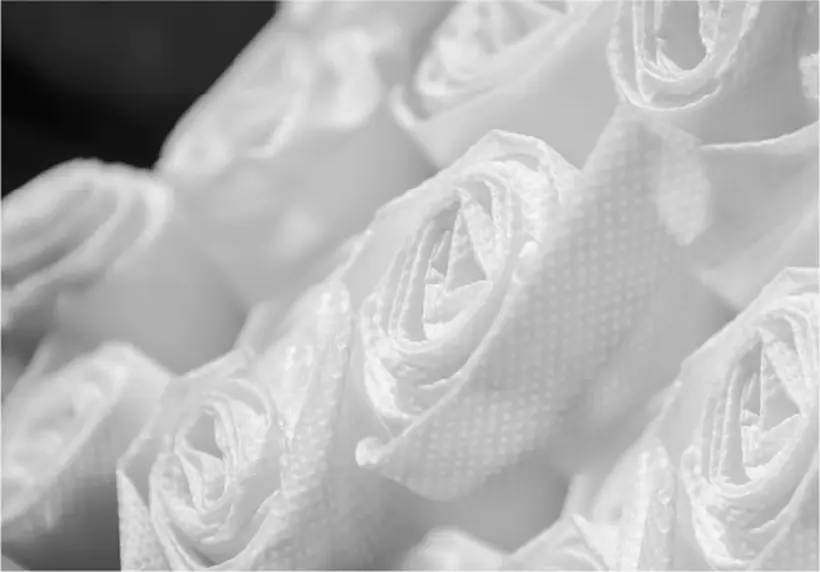
Composite waste from disposable diapers
Nonwoven fabric
Composite waste generated during the manufacturing process

Packaging film
Composite materials
Multilayer film used for food and product packaging

Report - Plastic Waste Management Institute (2020).
Current status and issues of waste plastic processing in Japan
Currently, approximately 72% of waste plastics recycled in Japan are processed through thermal recycling involving heat recovery or landfill disposal.
However, these methods are not considered recycling internationally.
esa is addressing this situation by aiming to make it possible to recycle composite plastics that are difficult to recycle domestically, with the goal of building a circular society that does not burn or bury waste.
Yuki Circular Factory
Dual Line for Hard to recycle, inseparable composite plastic

Location
1-2 Shinyabata, Yuki City, Ibaraki Prefecture esa inc. Yuki Factory
Access
From Oyama Station (via Yamabiko or Nasuno on the Tohoku Shinkansen), transfer to the JR Mito Line and get off at Yuki Station. Approximately 9 minutes by car from the station.
Our Team

Chikako Kurokawa
CEO
- BA in Social Anthropology, Goldsmiths, University of London
- Co-founder of esa
- Serial entrepreneur with a proven track record in launching businesses across various industries
- Member of the Japan-ASEAN Young Business Leaders Steering Committee
PY Chou
CTO
- BA in IT & Management, Royal Holloway, University of London
- Over 20 years of experience in the plastic extrusion equipment business
- Co-founder of esa, responsible for technological development
PJ Chou
CSO
- BA in Business Administration, London South Bank University
- Over 20 years of experience in the plastic extrusion equipment industry
- Led horizontal forward integration in the U.S. market
- Co-founder of esa, structured equipment R&D to align with global policy development critical for the composite plastic business model
Hideaki Yonekubo
COO
- M.Sc. in Frontier Sciences, Department of Applied Chemistry, Faculty of Engineering, University of Tokyo
- 14 years at Canon in product development, holding over 30 patents
- 2 years at Asahi Kasei, leading circular economy initiatives including a national NEDO project on recycled plastics and launching “Blue Plastics,” a circular platform in Japan
- 4 years in the EU as a public affairs representative, engaging with EU sustainability policies including the Circular Economy
Hiroto Nakamura
CFO
- BA in Economics, Waseda University
- MBA, Columbia Business School
- 10 years at MUFG, primarily in the bank's project finance teams in Tokyo and New York
- 3 years at Bain & Company, mainly focusing on commercial due diligence and growth strategy development for funds and their investment targets
Transforming all plastics
into
sustainable resources.
Transforming all plastics into sustainable resources.
For inquiries about composite plastic recycling, licensing partnerships, or requests for interviews and speaking engagements, please feel free to contact us.
Contact Us
